Hydraulic Breaker for Backhoe Loaders: The Complete Buyer’s Guide
2026-09-16

Underwater demolition is one of the most demanding environments in modern construction. Projects like deepening navigation channels, underwater rock breaking, bridge pier and wharf demolition, coastal defense construction, and concrete pile driving present extreme challenges. Due to the inherent uncertainty, low-visibility blind spots, and intense hydrostatic pressure of sub-surface environments, standard equipment faces severe risks.
Never submerge a standard hydraulic breaker. Without precise modifications, water ingress will cause immediate, catastrophic damage.
To achieve safe, high-performance, and reliable underwater operations, the breaker must be retrofitted with a professional underwater kit and supported by external high-pressure air supply system. This guide details the essential equipment configuration, standard operating procedures, and model selections required to master underwater hydraulic breaking.
The primary threat to a submerged hydraulic breaker is water entering the critical impact area between the piston and the tool. Water ingress leads to internal corrosion, bearing machine damage, component breakage, and rapid failure due to “hydraulic lock” or cavitation.
To counter this, a professional underwater assembly connects the breaker to an external air compressor system. This setup constantly fires a powerful jet of compressed air into the breaker’s internal housing, creating a continuous “air shield” (positive pressure). This pressure actively repels water, sand, and salt away from sensitive components.
To guarantee that the air entering the breaker is consistently dry and pressurized, a specialized three-part pneumatic system must be deployed:
To maximize equipment lifespan and maintain rigorous safety standards, operators must strictly adhere to the following three-phase operational checklist.
Before the breaker ever touches the water, it must undergo a comprehensive inspection on dry land:
While working underwater, air pressure must be meticulously managed based on the exact depth of the breaker. The operational golden rule is to maintain an air pressure that is roughly 20% higher than the surrounding water pressure.
| Operational Depth | Required Compressed Air Pressure |
| 0 to 5 Meters | 1.0 – 2.0 bar |
| 5 to 10 Meters | 2.0 – 3.0 bar |
| 10 to 15 Meters | 3.0 – 4.0 bar |
Critical Sub-surface Safety Controls:
Prevent Lubricant Blowout: Air pressure must be strictly monitored via gauges. If the air pressure is set excessively high, the intense force will blow the vital grease out of the housing, stripping the machine of lubrication and causing internal friction failure.
Mitigate Blank Firing: Underwater blind spots make accidental empty strikes common. Equipment must feature an Anti-Blank Fire mechanism to eliminate blank strikes, thereby protecting the excavator’s extended arm and boom from violent, structural vibrations.
Carrier Base Customization: The excavator must be retrofitted with a specialized pipeline along the boom, complete with a flow and pressure regulator mounted near the cabin. For deep or prolonged operations, the control pressure gauge must be routed directly into the cabin so the operator can monitor and adjust air delivery in real-time.
The moments immediately following the breaker’s extraction from the water are critical for long-term survival. Perform these steps after every sub-surface session:
Matching the correct breaker model to your carrier and depth requirements is paramount to achieving a profitable yield and protecting your assets.
Beilite provides a highly engineered family of specific underwater-ready models designed to handle varying project scales: BLTB-100 / BLTB-125 / BLTB-135 / BLTB-140 / BLTB-150 / BLTB-155 / BLTB-165 / BLTB-175 / BLTB-195 / BLTB-200 / BLTB-210 / BLTB-230
When deploying a massive 90-Ton class excavator with an extended boom for deep-water rock breaking at an average depth of 15 meters, the premier model recommendation is the BLTB-210.
The efficiency of this underwater methodology is backed by successful heavy-civil applications across major river engineering projects:
Beilite BLTB-210 was successfully paired with a Sany 650 excavator to execute deep-water channel clearing.
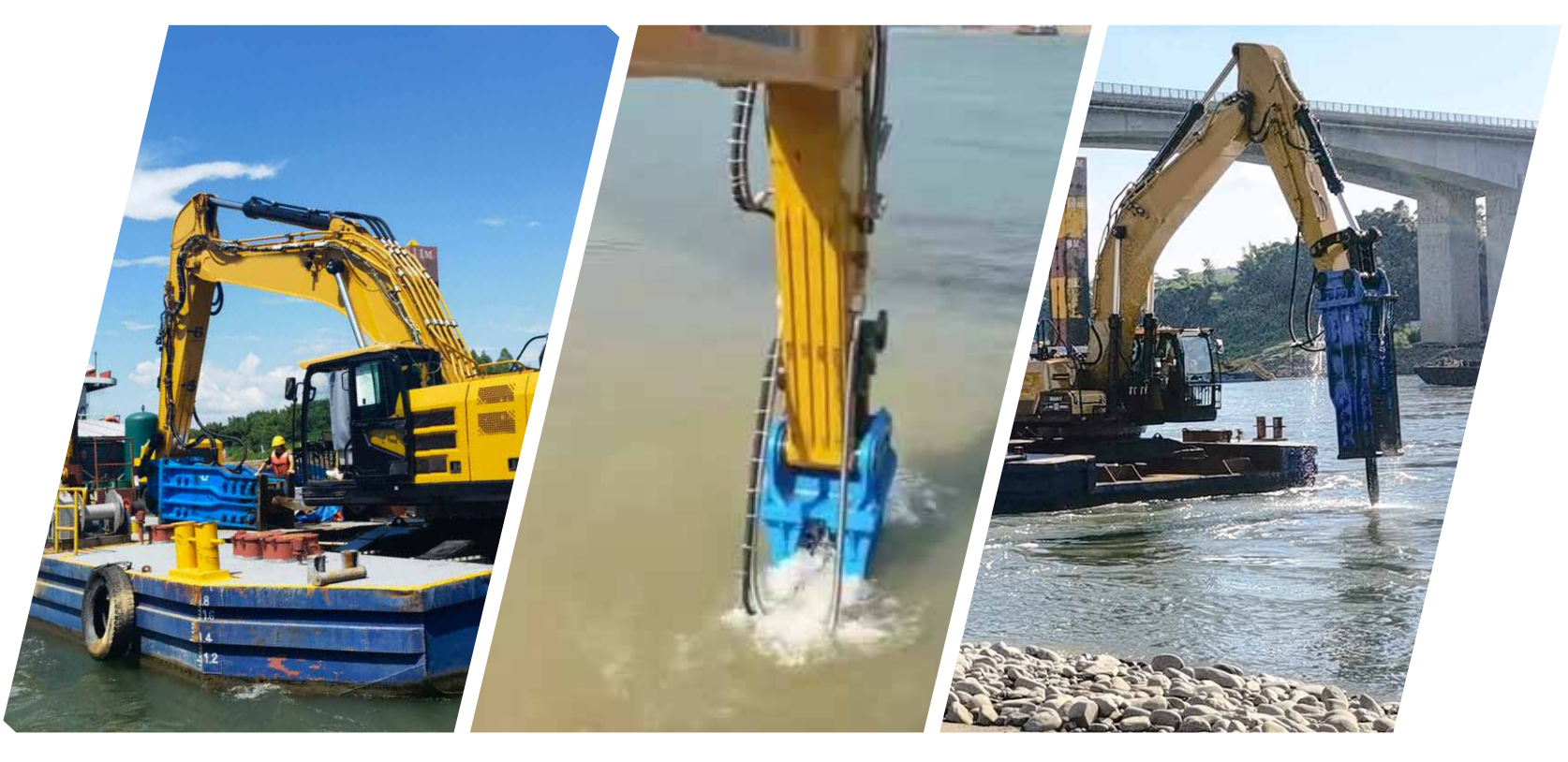 Yujiang River Renovation (2022)
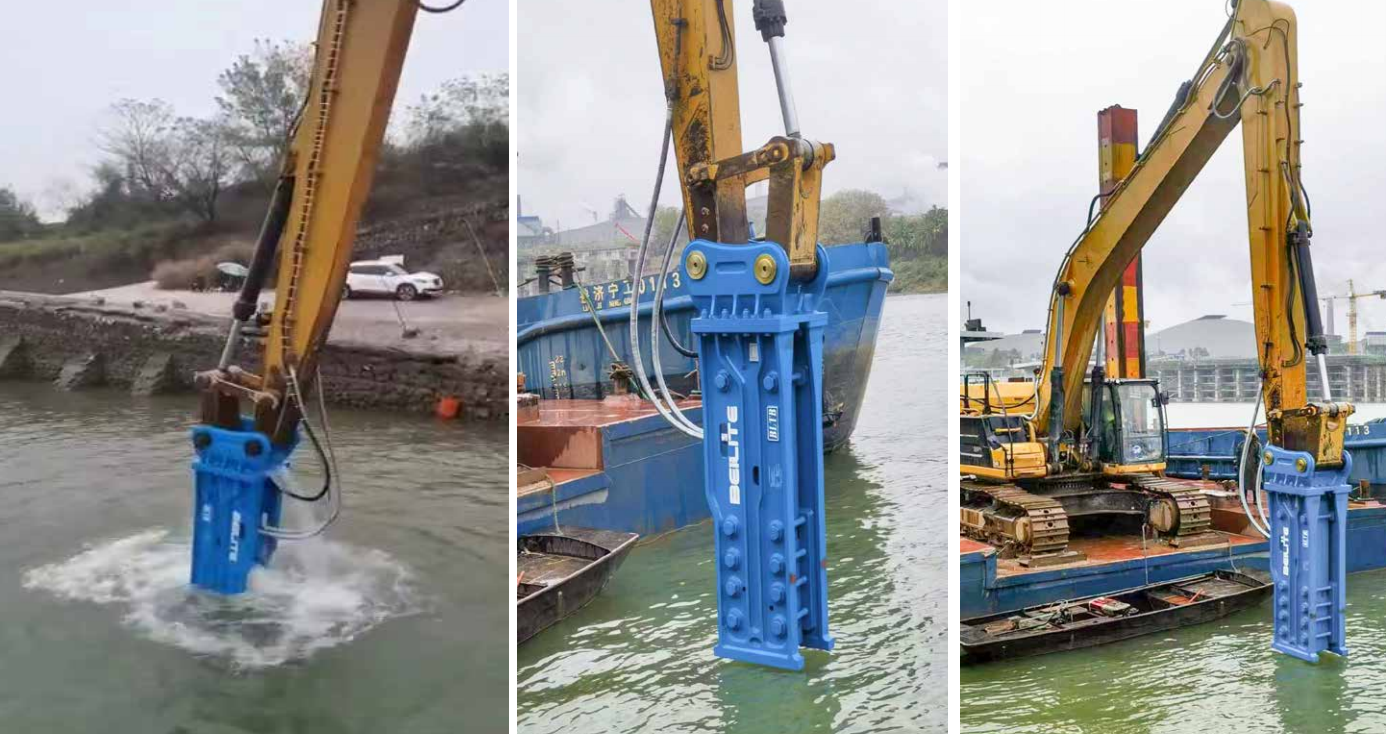
A Beilite BLTB-175 was deployed on a Caterpillar CAT 349, proving its reliability during intensive sub-surface demolition.
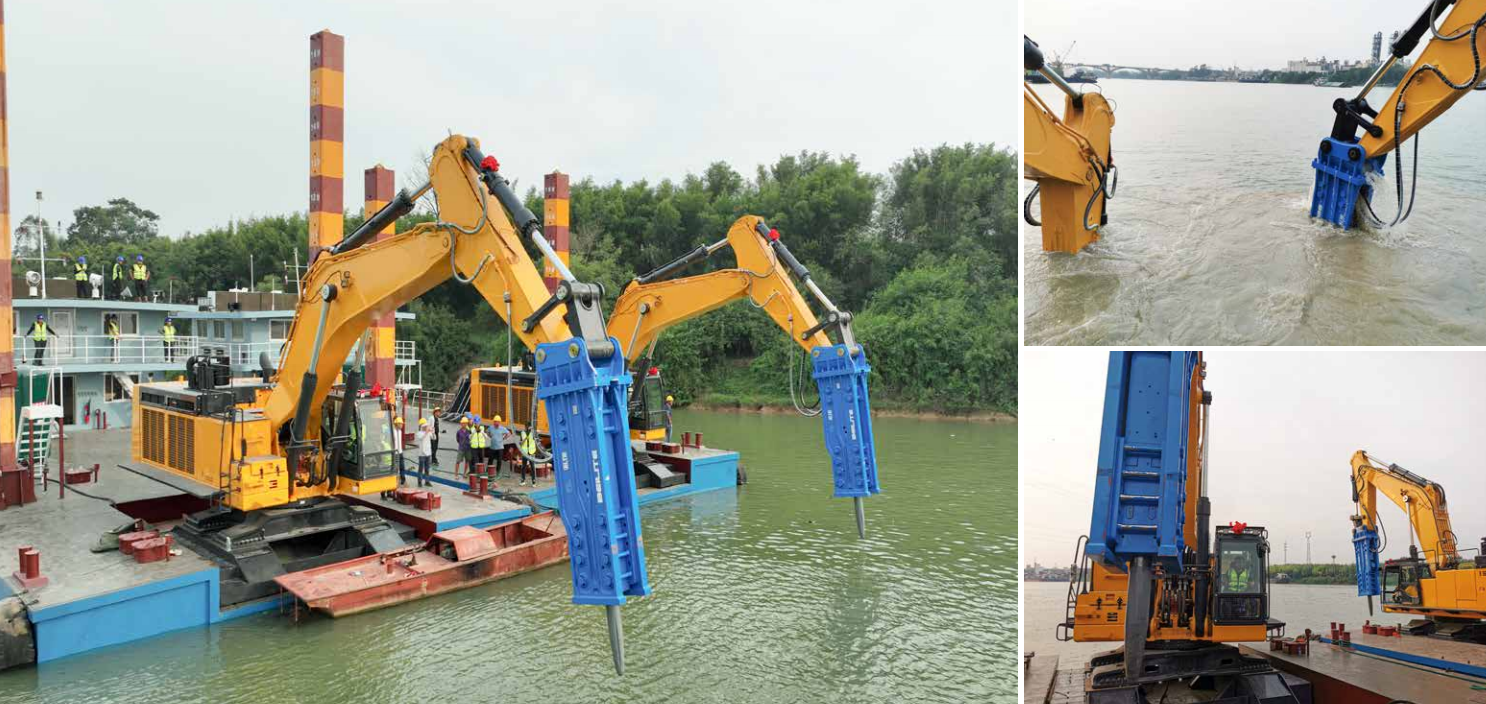
A Beilite BLTB-210 mounted on a Liugong 990 excavator successfully navigated severe underwater pressures to clear tough foundation rock.
As a global leader in the hydraulic attachment industry, Beilite is dedicated to engineering high-performance, ultra-reliable demolition solutions for the world’s toughest environments. With decades of pioneering research, state-of-the-art manufacturing, and a strict commitment to quality, Beilite’s specialized underwater hydraulic breakers have become the benchmark for heavy-civil marine engineering. By seamlessly integrating cutting-edge technologies like advanced pneumatic positive-pressure systems, anti-blank fire mechanisms, and intelligent automatic lubrication, Beilite empowers operators to conquer the unpredictable challenges of sub-surface demolition with absolute confidence and maximized uptime.
Ready to take your marine demolition to the next level? Contact Beilite’s technical team today to configure the perfect underwater breaking system for your next deep-water project!





 Phone/ Whatsapp:
  Email: