Hydraulic Breaker for Backhoe Loaders: The Complete Buyer’s Guide
2026-09-16

For procurement managers, mining contractors, and equipment rental firms, outfitting a 100-ton class excavator is a capital-intensive decision. Operating at this scale means standard commercial attachments won’t suffice. To achieve maximum productivity in extreme environments, you require true Mining Class Hydraulic hammers.
Choosing the wrong attachment leads to catastrophic carrier wear, excessive downtime, and lost tonnage. This guide provides the technical insights and structural criteria necessary to select a high-performing rock hammer tailored to your 100-ton machine.
A 100-ton excavator exerts immense hydraulic power and structural force. Matching it with an under-engineered hammer results in rapid tool failure, housing cracks, and severe hydraulic oil overheating.
Buyer Insight: Standard heavy hammers max out around the 50-ton carrier class. For 100-ton carriers, you must source a specialized mining-class hammer built with oversized housings, reinforced tie-rods, and heavy-duty dampening systems to withstand prolonged high-impact force.
Recommend Reading:Top Hydraulic Hammer Supplier for Liebherr Excavator
Correct sizing protects your excavator’s boom and hydraulic system while optimizing impact delivery. A hammer that is too light will bounce against the material, sending destructive vibrations back into the excavator arms. A hammer that is too heavy compromises carrier stability and safety.
The following data, derived from heavy-machinery production standards shown, outlines the required sizing parameters across the 90 to 120-ton carrier spectrum:
| Carrier Weight | Recommended hammer Model | Tool (Chisel) Diameter | Operating Hydraulic Flow | Primary Application |
| 90–130 Tons | BLTB-245 | 245 mm | 450–550 L/min | Heavy Quarrying & Bulk Demolition |
| 90–160 Tons | BLTB-260 | 260 mm | 490–590 L/min | Hard Rock Mining & Extraction |
| 120–200 Tons | BLTB-280 | 280 mm | 510–650 L/min | Extreme Open-Pit Mining & Slag |
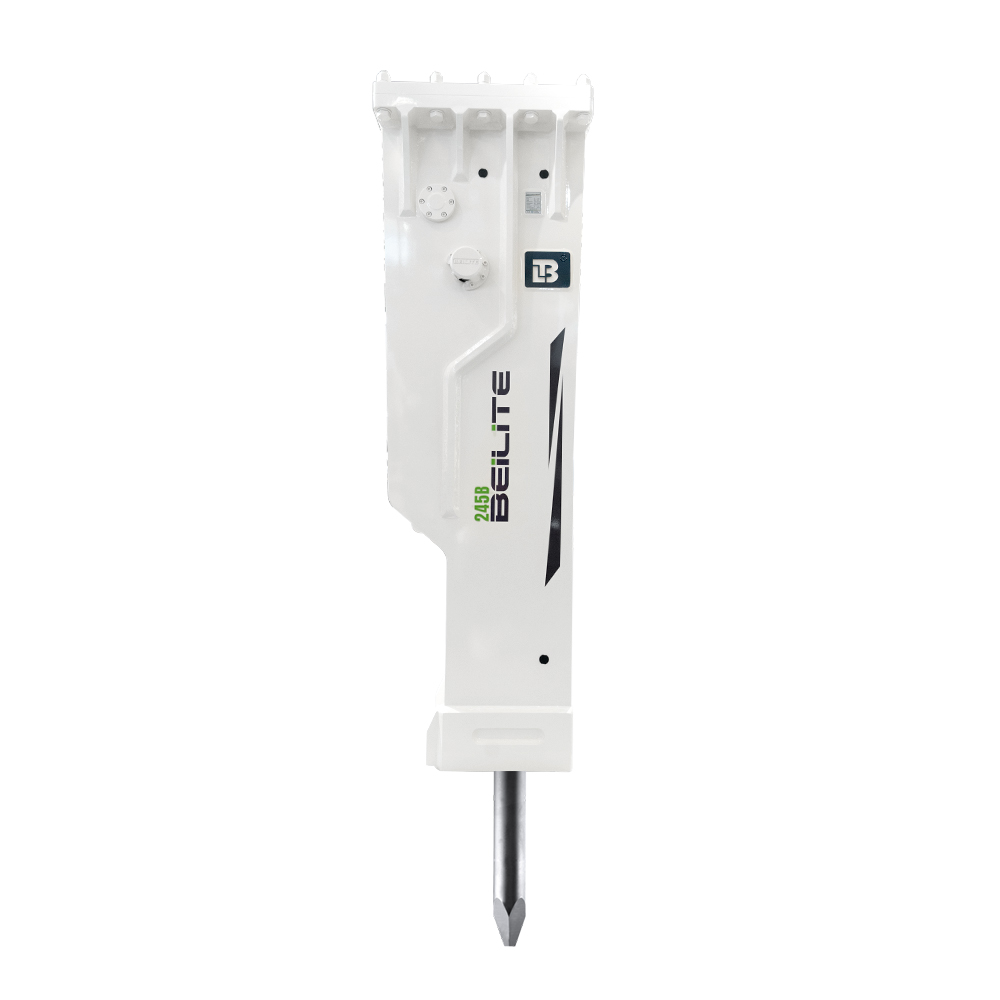
Contact us for Beilite Hydraulic Hammer Catalog for Model 245
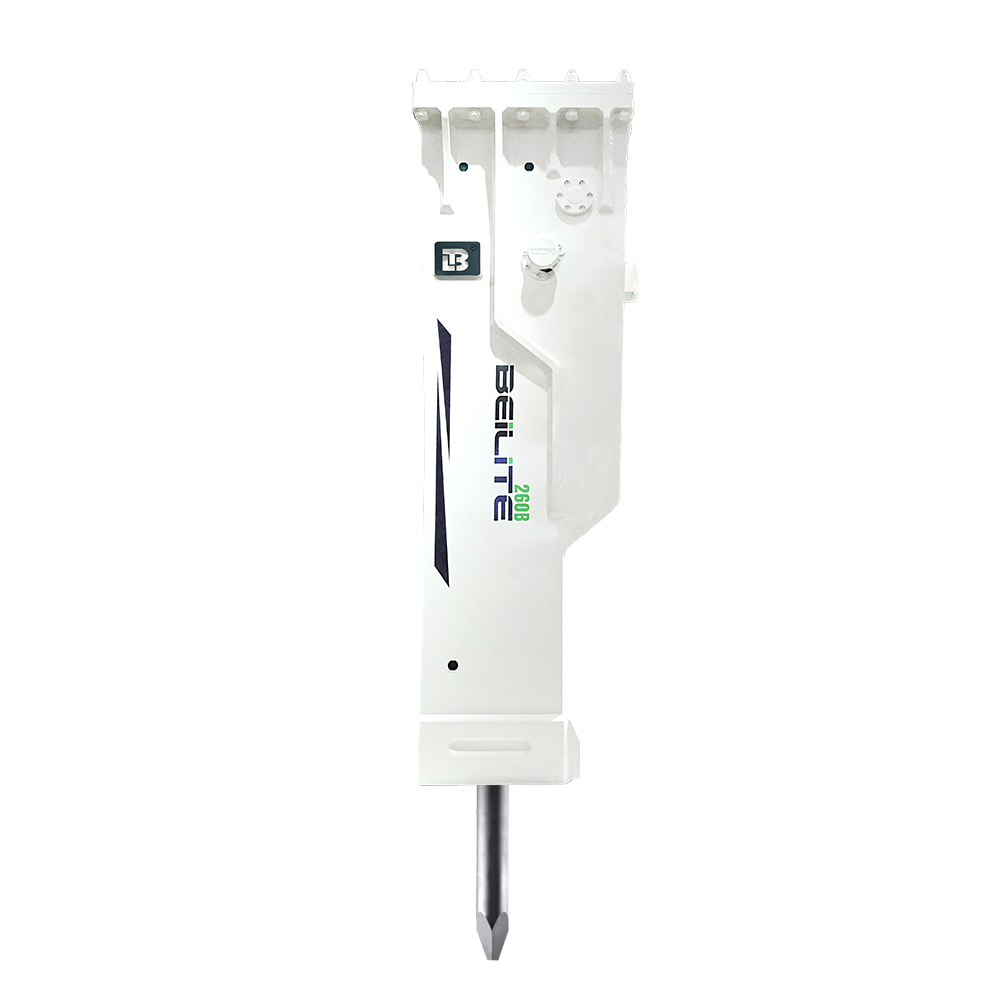
Contact us for Beilite Hydraulic Hammer Catalog for Model 260
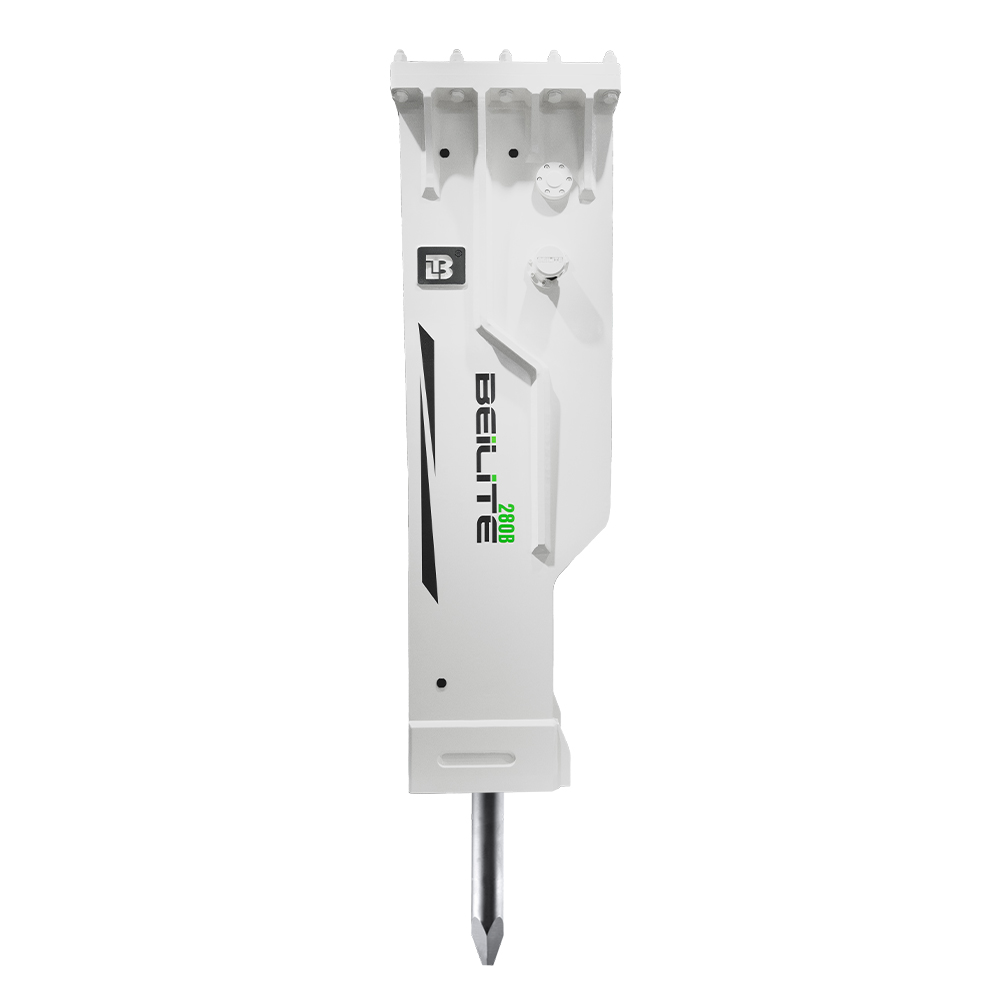
Contact us for Beilite Hydraulic Hammer Catalog for Model 280
For 90–120 ton excavators, mining contractors typically require heavy-duty hydraulic hammers with large tool diameters, high impact energy, and reinforced housing. BEILITE’s BLT280 series is designed specifically for these demanding applications.
In 2025, BLTB 280 Model Won Manufacturers’ Innovation Award: Tools and Attachments in World Demolition Summit.

Learn More: BLTB 280-5-W-AC15 Wins the 2025 World Demolition Award for Innovation – Tools & Attachments
When evaluating international or premium alternative manufacturers, prioritize these mechanical and structural configurations:
In massive rock formations, high blow frequency (shocks per minute) with low energy merely polishes the rock surface. For a 100-ton excavator, high single-blow impact energy is critical to fracture tough materials. Look for large-diameter pistons that maximize kinetic energy transfer per strike.
Opt for a system utilizing a fully hydraulic operational cycle or a heavily optimized oil-and-gas balance. A robust hydraulic design yields:
Manual greasing on a 10-ton to 14-ton attachment is inefficient and easily overlooked. An integrated auto-lube system injects high-temperature, chisel-grade grease into the front bush and tool mechanism continuously during operation. This single feature prevents premature bush failure and tool scoring.
For urban infrastructure demolition or compliance with strict European environmental regulations, select a fully enclosed, box-type (silenced) housing. Heavy polyurethane dampening pads isolate the power cell from the outer shell, protecting the excavator boom from high-frequency vibrations while dropping operating noise levels down significantly.
The outer housing and front head must be fabricated from high-strength alloy steel subjected to specialized heat treatment. Check the hardness ratings of the thrust bushes and chisels; specialized metallurgy ensures structural integrity over thousands of operational hours.
Recommend Reading:Top Hydraulic Breakers for CAT 320,330,323,336,340&350 Excavators
Engineering teams must audit the exact technical metrics of a hammer before purchase. The technical matrix below outlines the critical operational requirements for this class based on engineering data from:
| Specification | Typical Range (100T Class) |
| Compatible Excavator Weight | 90 – 160 Tons |
| hammer Operating Weight (Box) | 12,166 – 14,753 kg |
| Chisel (Tool) Diameter | 260 – 280 mm |
| Required Oil Flow | 490 – 650 L/min |
| Working Operating Pressure | 300 – 330 bar |
| Blow Frequency | 60 – 100 bpm |
An engineering mismatch between your 100-ton excavator and the hydraulic hammer causes rapid component destruction.
Oil Flow: Excess flow causes internal hydraulic spikes, damaging seals and fracturing tie-rods. Insufficient flow starves the hammer, causing erratic cycling.
Relief & Return Pressure: High back-pressure in the return line cushions the piston’s return stroke, dropping impact energy. Ensure host excavator line diameters (hose and hard piping) match or exceed the hammer’s port sizes.
Recommend Reading: Top 10 Hydraulic Hammer Manufacturers for Bobcat Excavators
| Evaluation Factor | Global OEM Brands | Premium Alternative Brands (e.g., BEILITE) |
| Price | Premium (High markup) | Balanced / High Cost-Performance |
| Performance | Baseline Standard | Equivalent (Up to 15% efficiency gains) |
| Parts Availability | Global Network | Global Network / Direct Factory Supply |
| Delivery Lead Time | Often 12–24 Weeks | Rapid Production & Delivery |
BEILITE has specialized in hydraulic hammer manufacturing since 2002 and developed China’s first heavy-duty hydraulic hammer. With models compatible with 0.5–350-ton excavators, the company has extensive experience supplying mining, quarry, and demolition projects worldwide.
Heavy-duty hammers operate under extreme loads, making wear resistance a critical purchasing factor. BEILITE uses custom alloy-steel pistons and heat-treated components, allowing cylinder integrity to remain above 98% after more than 10,000 operating hours. Implement these intervals to sustain that lifespan:
Recommend Reading: Top 10 Hydraulic Breaker Hammer Manufacturers for Mining and Construction Projects
The best hammer is a heavy-duty mining-class tool (such as the BLTB-260 or BLTB-280) featuring a fully enclosed housing, an auto-lubrication system, a tool diameter exceeding 245mm, and a solid track record in heavy mining applications.
An appropriately sized hydraulic hammer for a 90 to 160-ton excavator weighs between 12,000 kg and 15,000 kg (approx. 12 to 15 metric tons), depending on whether it utilizes a box-silenced or open-frame configuration.
Chisel life varies significantly by material hardness. In highly abrasive quartz or granite, tools may need replacement every few weeks, whereas non-abrasive limestone applications allow tools to last for several months.
When operating at the 100-ton excavator tier, errors are costly. Success depends entirely on matching your carrier’s hydraulic capacity with a robust, mining-grade hammer, prioritizing engineering metrics over low-cost entry points, and securing an uninterrupted spare parts supply chain.
Since 2002, BEILITE Machinery has been manufacturing premium hydraulic hammers for mining, demolition, quarrying, and infrastructure projects. With hundreds of international patents, ISO 9001, ISO 14001, ISO 45001, and CE certification, as well as membership in both the European Demolition Association (EDA) and the Association of Equipment Manufacturers (AEM), BEILITE supplies hydraulic hammers to customers in more than 60 countries worldwide.
Need an Exact Match for Your Fleet?
Contact the BEILITE engineering team today to receive precise model recommendations, complete technical specification sheets, and a customized quotation tailored to your specific excavator brand, rock density, and job site environment.





 Phone/ Whatsapp:
  Email: