Hydraulic Breaker for Backhoe Loaders: The Complete Buyer’s Guide
2026-09-16

As experts at BEILITE Machinery, we often receive questions about the operational principles of our equipment. One of the most fundamental, yet misunderstood, topics is the role of nitrogen gas. Why do we charge a hydraulic breaker nitrogen system? The answer is simple: without nitrogen, your hydraulic breaker would be drastically underpowered and could cause significant damage to your excavator. Nitrogen is the unseen force that enables the immense breaking power you rely on every day. It performs two distinct and vital functions: generating impact energy and protecting the carrier’s hydraulic system.
This is not just a maintenance footnote; it’s a core principle of the breaker’s design. Understanding how nitrogen works allows you to diagnose problems, perform correct maintenance, and ultimately get more life and productivity from your attachment. Let’s explore the science behind this essential gas.
The primary function of nitrogen in a hydraulic breaker is twofold. First, it acts as a “gas spring” in the rear head (or back head) of the breaker. This compressed gas stores and releases a massive amount of energy, which is used to force the piston down at high velocity to strike the working tool. This is the main source of the breaker’s impact power. Second, in breakers equipped with an accumulator, nitrogen serves as a hydraulic shock absorber.It cushions the pressure spikes within the carrier’s hydraulic system, ensuring a smooth, powerful, and consistent operation while protecting the excavator’s pumps and hoses from damaging pressure fluctuations.
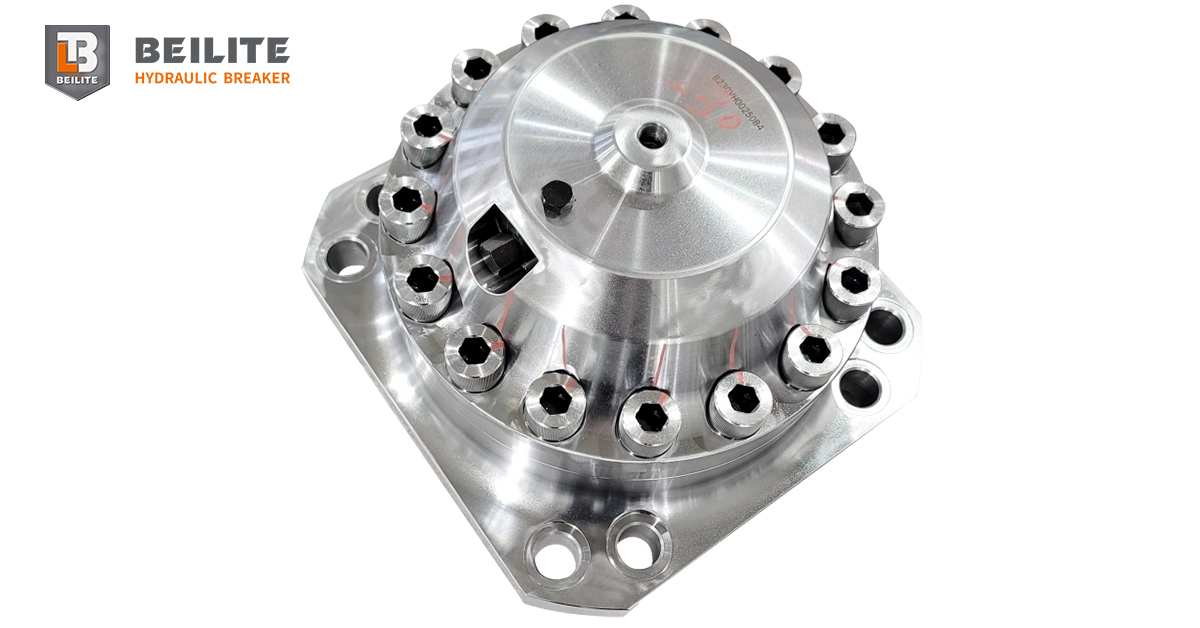
Think of the nitrogen chamber in the Rear Cylinder (back head) as the engine of the breaker. While hydraulic oil initiates the cycle, it’s the compressed nitrogen that provides the explosive force for the impact. The hydraulic oil’s job is to move the piston upward, compressing the nitrogen gas sealed in this upper chamber. This action is like compressing a very powerful spring. The more the gas is compressed, the more potential energy it stores.
This design is intentional. Relying on gas, which is highly compressible, allows the breaker to store and release energy far more rapidly and intensely than relying on hydraulic fluid alone. This stored energy is the key to achieving the high impact rates required for breaking hard rock and concrete.
The operational cycle is a perfect example of energy conversion. Here is a step-by-step breakdown:
This cycle repeats hundreds of times per minute, creating the powerful and continuous impacts that make a hydraulic breaker so effective. Without the correct nitrogen charge in the back head, the piston would lack the force needed for effective breaking.
Internal Link: How does Hydraulic Rock Breaker Work?
While the back head nitrogen is all about creating power, the nitrogen in the Accumulator is about control and protection. The hydraulic system of an excavator, or any carrier, is not designed to handle the violent pressure spikes and fluctuations that a breaker’s rapid-fire action creates. Every time the breaker’s valve shifts, it sends a pressure wave back through the hydraulic hoses.
Without a dampening mechanism, these pressure waves would hammer the carrier’s hydraulic pump, seals, and connections. This leads to premature wear, overheating, and eventual failure of very expensive components. The accumulator is the breaker’s built-in insurance policy for your excavator.
The Accumulator is a small chamber connected to the pressure side of the breaker’s hydraulic circuit. Inside, a flexible Diaphragm separates a pre-charge of nitrogen gas from the hydraulic oil.Its function is straightforward but critical:
By performing these actions, the accumulator ensures the hydraulic breaker has a steady supply of energy while protecting the host machine from the attachment’s demanding operational cycle.
Internal Link: Extend Life, Boost Efficiency: Daily Maintenance and Operation Guide for Hydraulic Breakers
Diagnosing incorrect nitrogen pressure early can save you from significant downtime and repair costs.If the nitrogen charge is low, you will notice clear performance issues.
For the back head charge:
For the accumulator charge:
If you observe any of these signs, you must stop work and check the nitrogen pressures with a proper charging kit.
Operating a breaker with incorrect nitrogen pressure is not just inefficient; it’s damaging.
It is vital to understand that the nitrogen pressure in the back head and the pressure in the accumulator are different and serve separate functions. They are not interchangeable. Each BEILITE breaker model has specific, factory-recommended pressure settings for both. These values are determined by our engineers to ensure optimal performance and safety.
| Component | Function | Pressure Type | Consequence of Incorrect Charge |
| Rear Cylinder / Back Head | Power Generation (Gas Spring) | Static Pre-charge | Low pressure = weak hits. High pressure = seal damage, reduced stroke. |
| Accumulator | System Protection (Shock Absorber) | Static Pre-charge | Low pressure = ineffective dampening, hose jumping. High pressure = stiff, no absorption. |
Always refer to the official BEILITE operation and maintenance manual for your specific model before attempting to check or charge the nitrogen systems. Using the wrong pressure values will lead to poor performance and potential equipment damage.
At BEILITE, we understand that the reliability of a breaker’s nitrogen system is fundamental to its entire service life. We use high-grade seals and diaphragms specifically designed to withstand the high pressures and temperatures involved in breaker operation. Our Cylinder Body Assembly components are machined to precise tolerances to ensure a perfect seal, preventing gas leakage and ensuring consistent performance over thousands of hours of operation. Our rigorous quality control checks every breaker’s nitrogen system before it leaves our factory, so it arrives on your job site ready to perform.
Viewing nitrogen charging as just another routine task is a mistake. It is a critical calibration that directly defines the breaker’s performance and protects your carrier. By understanding the dual roles of nitrogen—as both a power source and a system protector—you can better troubleshoot issues, adhere to maintenance schedules, and ensure your BEILITE hydraulic breaker delivers the power and reliability we designed it for. Never ignore the symptoms of incorrect pressure; addressing them promptly protects your productivity and your investment.
Still facing issues? Schedule a free video consultation with our BEILITE technical support team.









 Phone/ Whatsapp:
  Email: