Hydraulic Breaker for Backhoe Loaders: The Complete Buyer’s Guide
2026-09-16

A hydraulic hammer for excavator is one of the most widely used attachments for breaking concrete, rock, asphalt, masonry, and other hard materials. By converting hydraulic power from an excavator into high-frequency impact energy, a hydraulic hammer can significantly expand the machine’s capabilities and improve productivity on construction, demolition, quarrying, road maintenance, and utility projects.
However, choosing the right excavator hammer is not simply a matter of selecting the largest or most powerful model. The breaker must match the excavator’s operating weight, hydraulic flow, working pressure, mounting dimensions, and application.
In this guide, we explain what an excavator hydraulic hammer is, how it compares with a jackhammer, what weight ranges are available, and how to select the right breaker for different excavators and applications.
A hydraulic hammer, also called a hydraulic breaker, is an impact attachment powered by an excavator’s hydraulic system. Hydraulic oil flows into the breaker and drives an internal piston. The piston repeatedly strikes the tool or chisel, transferring impact energy into the material being broken.
Unlike a handheld jackhammer, an excavator-mounted hydraulic hammer uses the excavator as its carrier. This allows operators to generate much greater breaking force while maintaining good control and mobility.
A hydraulic hammer can be used for:
The right breaker can turn a standard excavator into a versatile demolition and breaking machine.
The operating principle is relatively simple.
First, the excavator supplies hydraulic oil through its auxiliary hydraulic circuit. The hydraulic oil enters the breaker and controls the movement of the internal piston.
The piston moves back and forth at a high frequency. During the power stroke, it strikes the upper end of the tool, transferring impact energy through the chisel into concrete, rock, or another hard material.
The basic process can be summarized as:
Excavator hydraulic power → Hydraulic control system → Piston movement → Impact energy → Chisel → Material breaking
Different hydraulic hammer designs use different valve, accumulator, piston, and cylinder configurations. These design differences affect impact energy, impact frequency, noise, vibration, durability, and maintenance requirements.
For buyers, the important point is that the hydraulic hammer must be correctly matched to the excavator’s hydraulic system.
There is no single hydraulic hammer that is the best choice for every excavator. The ideal model depends on the machine and the job.
When selecting the best hydraulic hammer for excavator applications, we recommend considering these factors:
Mini excavators generally require lightweight breakers with relatively low hydraulic flow requirements.
For machines in the approximately 0.5–6 ton class, compact hydraulic breakers are commonly used for:
A breaker that is too heavy can negatively affect excavator stability and lifting performance. Therefore, compact excavator owners should prioritize compatibility and maneuverability rather than maximum impact power.
Excavators in the 6–20 ton class are commonly used for construction, roadwork, demolition, and utility projects.
These machines can use medium-sized hydraulic breakers that provide a balance between impact energy and operating efficiency.
For contractors handling multiple applications, a medium hydraulic hammer can be particularly valuable because the same attachment may be used for concrete, asphalt, masonry, and moderate rock breaking.
Large excavators above approximately 20 tons can accommodate significantly heavier hydraulic breakers.
These breakers are commonly used for:
For heavy-duty projects, buyers should pay close attention to impact energy, component strength, heat treatment, accumulator performance, and long-term serviceability.
A high-quality heavy hydraulic hammer should be capable of maintaining stable impact performance during extended working periods.
One of the most common questions from buyers is: What is the difference between a jackhammer and a hydraulic hammer?
The main difference is the power source, size, and operating method.
A traditional jackhammer is generally a handheld tool powered by compressed air or electricity. It is designed for workers to manually break concrete, pavement, masonry, and other materials.
A hydraulic hammer is mounted on an excavator or another hydraulic carrier and is powered by hydraulic oil.
| Feature | Jackhammer | Hydraulic Hammer |
| Power source | Electric or pneumatic | Hydraulic |
| Mounting | Handheld | Excavator/carrier mounted |
| Operation | Manual | Machine-operated |
| Typical size | Compact | Small to very large |
| Breaking capacity | Light to medium | Light to heavy-duty |
| Typical application | Small repairs and demolition | Construction, demolition, quarrying, mining |
| Productivity | Suitable for small jobs | Higher productivity for larger jobs |
A jackhammer can be a practical solution when the work area is small or an excavator cannot access the site.
A hydraulic hammer is generally more suitable when contractors need higher productivity, greater impact energy, and longer working periods.
If you search for terms such as “jackhammer attachment for excavator”, “excavator jackhammer,” or “excavator hammer attachment,” you are generally looking for a hydraulic hammer or hydraulic breaker.
The terminology can vary between markets.
Common names include:
Technically, “jackhammer” usually refers to a handheld breaking tool, while an excavator-mounted breaking attachment is more accurately called a hydraulic hammer or hydraulic breaker.
For SEO and product searches, however, these terms are often used interchangeably by equipment buyers.
The weight of a hydraulic hammer can range from lightweight compact models to several-ton heavy-duty breakers.
The correct breaker weight depends mainly on the excavator’s operating weight and hydraulic capacity.
A general reference is:
| Excavator Operating Weight | Typical Hydraulic Hammer Weight* |
| 0.5–2 tons | Approx. 50–150 kg |
| 2–6 tons | Approx. 100–300 kg |
| 6–10 tons | Approx. 250–500 kg |
| 10–20 tons | Approx. 400–900 kg |
| 20–30 tons | Approx. 700–1,500 kg |
| 30–50 tons | Approx. 1,200–2,500+ kg |
| 50+ tons | Approx. 2,000–5,000+ kg |
*Actual specifications vary by manufacturer and model.
These figures should only be used as a general reference. A breaker should never be selected based on weight alone.
For example, two hydraulic hammers with similar weights can have very different hydraulic flow requirements and impact energies. The excavator’s hydraulic specifications and the manufacturer’s compatibility recommendations should always be checked before installation.
Not necessarily.
A common mistake is assuming that a heavier breaker automatically provides better performance. In reality, matching the breaker to the carrier is more important than choosing the heaviest possible attachment.
An oversized breaker may:
An undersized breaker may not provide enough impact energy to efficiently break hard rock or reinforced concrete.
The best hydraulic hammer provides the appropriate combination of impact energy, frequency, hydraulic flow, and durability for the application.
Before purchasing an excavator hammer, we recommend checking several important specifications.
The first step is to determine the excavator’s operating weight.
Breaker manufacturers normally provide a recommended carrier weight range for each model. The excavator should fall within this range.
Hydraulic flow is one of the most important compatibility factors.
If the excavator cannot provide sufficient flow, the breaker may not achieve its designed performance.
If the hydraulic flow is too high, the breaker may experience excessive heat and component wear.
Always compare the excavator’s auxiliary hydraulic flow with the hydraulic hammer’s recommended flow range.
The hydraulic hammer should also be compatible with the excavator’s working pressure.
Incorrect pressure can affect impact performance and may cause premature wear or damage to hydraulic components.
Mechanical compatibility is equally important.
Check:
A properly designed mounting bracket ensures that the breaker is securely connected to the excavator.
Chisel diameter is another useful indicator of breaker class.
Common tool types include:
The correct tool depends on the material and application.
Construction contractors use hydraulic breakers for concrete, masonry, asphalt, and foundation work.
A medium hydraulic breaker can be particularly useful because it can handle several different materials without requiring a dedicated machine for every task.
Demolition requires reliable impact performance and good durability.
For reinforced concrete and structural demolition, buyers should consider breaker impact energy, tool diameter, housing strength, vibration control, and ease of maintenance.
Quarrying and mining applications place greater demands on breaker components.
Hard rock requires consistent impact energy and durable pistons, cylinders, tools, bushings, and other wear components.
For these applications, we recommend focusing on long-term operating cost rather than purchase price alone.
Hydraulic breakers are widely used to remove:
Compact breakers are useful for municipal repair projects, while larger models are suitable for major road construction and infrastructure projects.
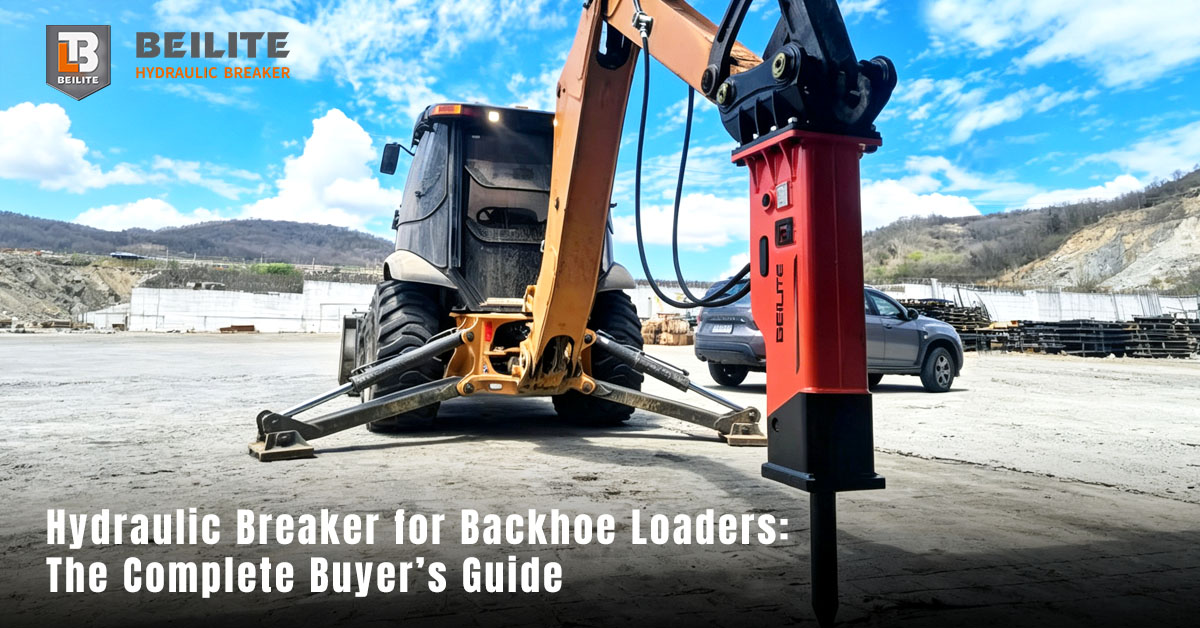
A hydraulic hammer for backhoe applications should be selected according to the backhoe loader’s hydraulic capacity and rear attachment specifications.
Backhoe loaders are often used for utility construction, road maintenance, landscaping, and municipal projects. A properly sized breaker can allow one machine to perform both excavation and breaking work.
Because backhoe loaders typically have different hydraulic specifications from conventional excavators, buyers should confirm flow, pressure, mounting dimensions, and attachment weight before purchasing.
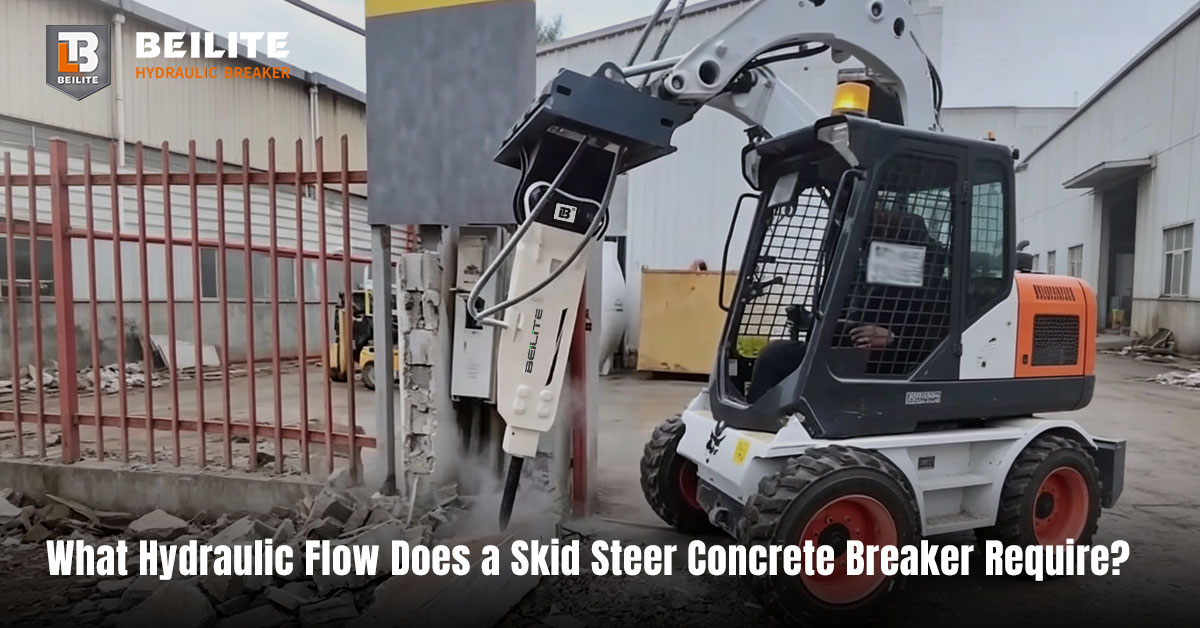
A hydraulic breaker for skid steer can turn a compact loader into an effective concrete and asphalt breaking machine.
Skid steer breakers are commonly used for:
The most important factor is matching the breaker with the skid steer’s auxiliary hydraulic flow.
For high-flow skid steers, the selected breaker must be specifically designed to operate within the machine’s hydraulic range.
Many contractors search for hydraulic hammer for sale and hydraulic hammer rental depending on project requirements.
Buying makes sense when:
For contractors and equipment dealers, ownership can also make sense when the attachment will generate revenue across multiple projects.
Rental can be a better choice when:
Before renting, confirm the breaker weight, hydraulic flow, excavator compatibility, chisel condition, rental period, and maintenance history.
Proper maintenance directly affects breaker performance and service life.
Correct lubrication reduces friction between the tool, bushings, and other components.
Follow the manufacturer’s recommended grease type and lubrication interval.
Regularly check for:
Replacing worn components at the appropriate time can help prevent more expensive internal damage.
Inspect hydraulic hoses and connections for leaks, damage, or loose fittings.
Hydraulic contamination and leakage can negatively affect both the breaker and excavator.
Many hydraulic breakers use nitrogen gas in an accumulator or gas chamber to support impact performance.
Nitrogen pressure should be checked and adjusted according to the manufacturer’s specifications.
Blank firing occurs when the breaker operates without the chisel being properly loaded against the material.
This can create excessive stress inside the breaker and should be avoided.
Operators should also avoid excessive side loading and unnecessary downward pressure.
For contractors, distributors, and equipment dealers, selecting the manufacturer is as important as selecting the model.
Consider:
At BEILITE, we manufacture hydraulic breakers for a wide range of excavator classes and applications. Our product range covers compact, medium, and heavy-duty breaking requirements, allowing customers to select a breaker based on carrier size and working conditions.
For international buyers, we also recommend evaluating the manufacturer’s ability to provide technical guidance and long-term spare parts support rather than focusing only on the initial purchase price.
The best hydraulic hammer depends on the excavator’s operating weight, hydraulic flow, pressure, application, and material hardness. A properly matched breaker will generally outperform an oversized or undersized model.
A jackhammer is typically a handheld pneumatic or electric tool, while a hydraulic hammer is an excavator-mounted attachment powered by hydraulic oil. Hydraulic hammers are designed for larger and more demanding breaking applications.
An excavator-mounted jackhammer is usually called a hydraulic hammer, hydraulic breaker, excavator breaker, or rock breaker attachment.
Hydraulic hammer weight can range from around 50 kg for compact mini excavator models to more than 5,000 kg for specialized heavy-duty breakers. The appropriate weight depends on excavator size and hydraulic specifications.
No. The breaker must be compatible with the excavator’s operating weight, hydraulic flow, working pressure, mounting dimensions, and application requirements.
No. A heavier breaker is not necessarily more productive. The best result comes from matching breaker impact energy and weight to the excavator and the material being broken.
Yes. Hydraulic breakers are available for skid steers and backhoe loaders, provided the attachment matches the carrier’s hydraulic and mechanical specifications.
Choosing the right hydraulic hammer for excavator applications requires more than comparing attachment prices or breaker weight. The most important factors are excavator compatibility, hydraulic flow, working pressure, impact energy, application, durability, and long-term maintenance requirements.
Whether you are looking for a hydraulic hammer for a mini excavator, a heavy-duty breaker for quarrying, a breaker for demolition, or a compact attachment for a skid steer or backhoe loader, the right model should be selected according to the actual working conditions.
For contractors, dealers, rental companies, and equipment owners, investing in a properly matched hydraulic breaker can improve productivity, reduce unnecessary downtime, and lower total operating costs.
If you are unsure which hydraulic hammer is suitable for your excavator, provide the excavator brand, model, operating weight, hydraulic flow, and working application to a professional hydraulic breaker manufacturer. The manufacturer can then recommend the appropriate breaker model, mounting configuration, and chisel type for your machine.





 Phone/ Whatsapp:
 Email: