Hydraulic Breaker for Backhoe Loaders: The Complete Buyer’s Guide
2026-09-16

Hydraulic excavator hammers, also known as hydraulic breakers or excavator hammers, are critical tools in mining, tunneling, municipal demolition, and foundation projects. These hydraulic hammer attachments allow excavators to deliver concentrated impact energy for breaking rock or concrete that standard buckets cannot handle. Choosing the correct hydraulic hammer depends on rock hardness, which directly affects efficiency, maintenance, and operational costs.
We explore hydraulic hammer solutions based on rock hardness, helping you select the right excavator breaker tool for maximum productivity.
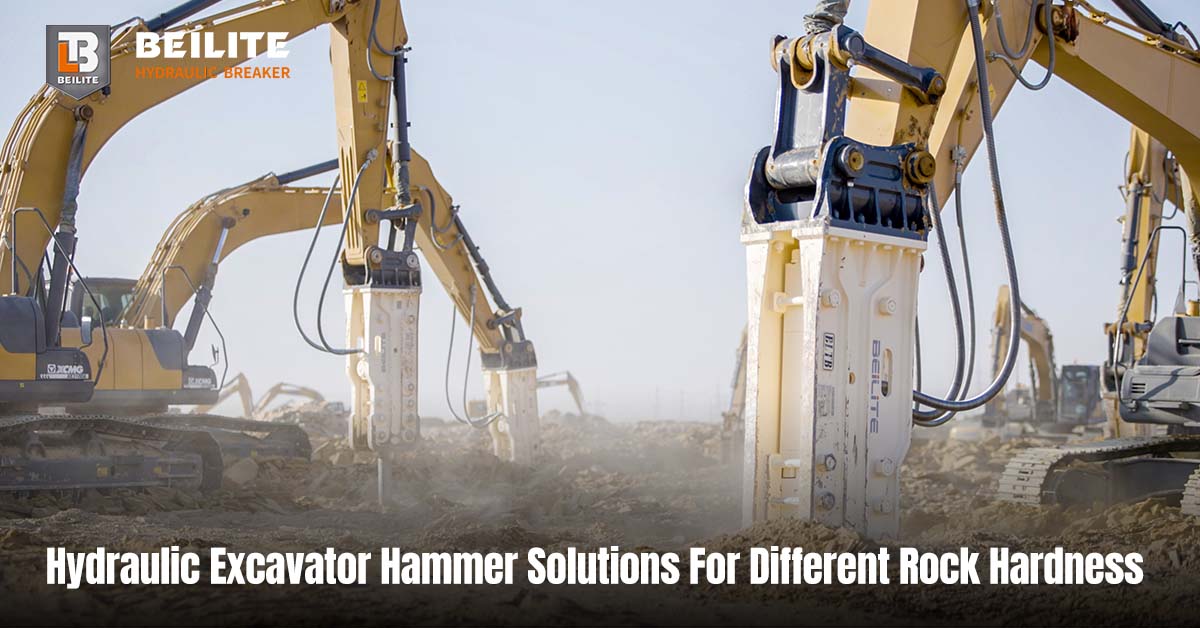
Rock hardness determines how a hydraulic hammer should be used. Rocks can be categorized by crushing resistance (MPa):
| Hardness Range | Rock Type | Recommended Hydraulic Hammer Use |
| <15 | Clay, soft coal seams, weathered soil | Small hydraulic hammers, high-frequency light strikes |
| ≥15–<30 | Soft limestone, shale, salt rock | Soft-rock hydraulic breakers, low-impact hammer mode |
| ≥30–<50 | Firm mudstone, weak sandstone | Medium hydraulic hammers, balanced energy/frequency |
| ≥50–<80 | Standard limestone, sandy shale | Standard hydraulic hammers with staged strikes |
| ≥80–<120 | Granite, dense sandstone, quartz veins | Heavy-duty hydraulic hammers, reinforced chisels |
| ≥120–<160 | High-strength granite, iron ore | Ultra-heavy hydraulic hammer attachments, point-breaking mode |
| ≥160 | Quartzite, basalt | Extreme-duty hydraulic hammers, layered rock breaking |
Selecting the right hydraulic hammer ensures optimal impact energy, reduced chisel wear, and longer equipment life.
Typical materials: Clay, soft coal seams, soft shale
Benefits: High efficiency, low fuel consumption, minimal hydraulic hammer wear
Recommend Reading: Hydraulic Breakers for Mini Excavators: More Capacity in Small Spaces & Jobs provides insights for mini hydraulic hammers and excavator hammer attachments.
Typical materials: Limestone, sandstone, mudstone
This hardness range represents the most common site conditions.
Recommend Reading: How to Choose the Right Hydraulic Breaker for Your Medium or Large Excavator explains excavator hydraulic hammer selection for medium to large machines.
Typical materials: Dense granite, quartz veins, iron ore
Recommend Reading: Hydraulic Breaker Hammer Efficiency: Fuel Consumption vs. Productivity shows how proper hydraulic hammer selection improves fuel efficiency and site productivity.
Typical materials: Quartzite, basalt, high-strength granite, iron ore
Recommend Reading: Excavator Hydraulic Hammer for Mining and Demolition Work highlights heavy-duty hydraulic hammers engineered for extreme rock conditions.
Rock hardness affects:
Common mistakes: Using a small hydraulic hammer on hard rock → low efficiency, high wear Using a large hammer on soft rock → wasted energy, high fuel consumption Ignoring excavator hydraulic parameters → overheating
Correct hydraulic hammer matching can improve efficiency by over 30% and extend hammer life by more than 50%.
Recommend Reading: How to Match Hydraulic Hammer Size Configurations to Your Job Requirements? guides sizing hydraulic breaker attachments for any excavator.
When choosing a hydraulic hammer:
Recommend Reading: Hydraulic Excavator Breaker Selection Guide provides a complete framework for choosing the ideal excavator hammer.
Proper hydraulic hammer maintenance is key to maximizing life and efficiency:
Recommend Reading: Extend Life, Boost Efficiency: Daily Maintenance and Operation Guide for Hydraulic Breakers explains daily maintenance of hydraulic hammer tools.
Modern excavator hammers are evolving for better performance and sustainability:
Recommend Reading: Hydraulic Hammer for Excavator Warranty Guarantee: Latest Buyer’s Guide covers advanced features that improve hydraulic hammer reliability.
Recommend Reading: Hydraulic vs pneumatic breakers: Which is better for your project?
| Rock Hardness | Crushing Strategy |
| Soft (<30 MPa) | High-frequency, light strikes |
| Medium (30–80 MPa) | Balanced energy and frequency |
| Hard (80–120 MPa) | High-impact energy |
| Very hard / Extreme (≥120 MPa) | Heavy-duty, staged breaking |
Core principle: Match hydraulic hammer impact energy to rock hardness, not just size or speed.
Recommend Reading: How to Pick the Best Excavator Rock Hammer for Different Rocks? provides detailed hydraulic hammer selection strategies.
How Long Should You Use a Hydraulic Breaker For ? Hydraulic Breaker Operation Time
For expert guidance on hydraulic hammer selection, contact Beilite. Their team can recommend the right hammer for your rock type, excavator, and work environment, ensuring maximum efficiency and reduced wear.
Get in touch with Beilite today to optimize your hydraulic breaker solution and extend the life of your excavator hammer tools.






 Phone/ Whatsapp:
  Email: