Hydraulic Breaker for Backhoe Loaders: The Complete Buyer’s Guide
2026-09-16

Selecting the right Heavy-Duty Hydraulic Breaker for Mining is far more than choosing the largest attachment available. Successful mining and quarry operations demand a precise alignment of the breaker’s technical specifications with the harsh, high-impact conditions of rock excavation. At BEILITE, our focus is on delivering consistent impact energy, long-term durability, and reduced downtime—essential factors in environments where every minute counts. Whether your goal is primary rock breaking, secondary breaking, or handling oversize material, choosing the correct Excavator Rock Hammer in Quarry is critical for productivity, safety, and cost efficiency.
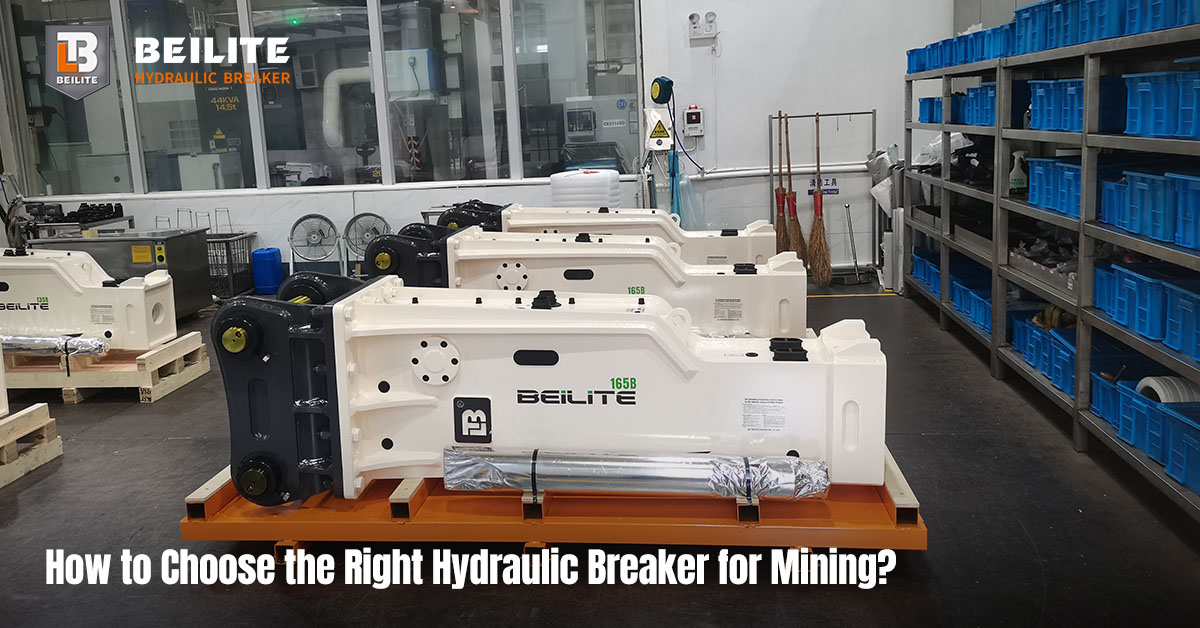
Mining sites are among the most punishing work environments for hydraulic equipment. Unlike general construction demolition, mining operations require continuous high-energy impacts to fracture homogeneous, high-strength rock formations. From hard rock excavation to aggregate production, equipment must endure abrasive material and extreme stress. Standard construction breakers often fail under the non-stop cycles of a mine, resulting in premature wear, downtime, and reduced productivity.
Heavy-duty mining breakers are engineered with reinforced Outer Casings, optional Silent Outer Casings, and wear plates designed to withstand abrasive rock. These design elements protect critical components such as the Cylinder Body Assembly and Piston, ensuring consistent performance in the toughest conditions.
Recommend Reading: How to Match Hydraulic Hammer Size Configurations to Your Job Requirements?
When selecting a Rock Removal Breaker for Hard Stone, several technical parameters are critical to consider.
For example, in quarry applications, models like BLT-155 and BLT-165 are optimized for excavators above 27 tons. They deliver superior impact energy while minimizing cycle time and handling secondary breaking on oversize rock efficiently, thanks to advanced hydraulic systems and Accumulator design that stabilizes pressure fluctuations.
Recommend Reading: Hydraulic Breakers for Mini Excavators: More Capacity in Small Spaces & Jobs
A defining feature of mining-grade hydraulic breakers is their Operating Pressure. Unlike standard construction hammers, heavy-duty mining breakers operate at elevated pressures—up to 230 bar in some cases. This high pressure, combined with precise Oil Flow, translates directly into increased impact energy for efficient rock penetration. Fewer blows are required to fracture material, speeding up operations and reducing wear.
The Accumulator Assembly plays a critical role. Charged with nitrogen gas at 55–60 bar, it stores hydraulic energy and absorbs pressure spikes, protecting both the breaker and the host machine’s pump. For secondary breaking equipment for mining, this ensures consistent piston return strokes even under variable flow conditions, maintaining optimal performance during long shifts.
Recommend Reading: Guide to Hydraulic Breakers: Types, Uses, Benefits and Maintenance
Durability is not optional for a Mining Hydraulic Hammer; it is a requirement. Mining operations expose equipment to immense thermal and mechanical stress. BEILITE’s design approach maximizes reliability:
These design choices improve down-time prevention, allowing mining breakers to endure the rigors of hard rock excavation and other mining demolition equipment applications.
Recommend Reading: Beilite Hydraulic Breaker Wear Parts: Standards & Replacement Guide
Even the most powerful Excavator Rock Hammer in Quarry requires correct handling:
Common Misapplications: Using the breaker as a lever, striking the same spot repeatedly, or operating below recommended pressure drastically shortens tool life. Correct technique ensures peak efficiency while minimizing wear on the Working Tool, Outer Bushing, and Piston.
Recommend Reading: How to Use a Hydraulic Breaker Correctly: A BEILITE Guide
Matching breaker size to the expected workload—not just the minimum requirement—is critical to avoiding premature failure and costly downtime.
Recommend Reading: How to Choose the Right Hydraulic Breaker for Your Medium or Large Excavator
The trend in mining breakers is toward:
These innovations will provide more reliable rock removal breakers for hard stone, especially in high-tonnage operations handling oversize material.
Recommend Reading: Hydraulic Breaker Hammer Efficiency: Fuel Consumption vs. Productivity
BEILITE is a leading manufacturer and provider of Heavy-Duty Hydraulic Breakers for Mining and construction applications, with over 20 years of experience in hydraulic demolition equipment design, production, and field service.
We specialize in:
Our advanced engineering ensures breakers withstand high-stress operations, minimize downtime, and maximize productivity. BEILITE supports clients worldwide with customized recommendations, maintenance guidance, and after-sales service.
Core Strengths:
Recommend Reading: Hydraulic Breaker Manufacturers: 6 Key Points to Choosing a Reliable Partner
Q1: How often should I check the accumulator gas pressure? A: Weekly or every 50 operating hours in heavy mining applications.
Q2: What Chisel Paste / Grease should I use? A: High-temperature, high-pressure paste (copper or graphite-based).
Q3: Can smaller breakers handle light secondary breaking? A: Using undersized breakers accelerates wear and increases downtime. Always match the breaker to the expected workload.
Keywords:
Heavy-Duty Hydraulic Breaker for Mining/Excavator Rock Hammer in Quarry/ Mining hammer / Mining breakers / Hydraulic rock breaker mining / Mining machinery / Mining tools / Mining excavator / Mining heavy machinery / Construction and mining






 Phone/ Whatsapp:
  Email: