Hydraulic Breaker for Backhoe Loaders: The Complete Buyer’s Guide
2026-09-16

Removing concrete barriers is one of the most demanding tasks in road construction and demolition projects. Whether working on highways, bridges, or industrial sites, contractors face the same challenge: balancing productivity, equipment wear, and total operating cost.
Choosing an undersized hydraulic breaker can slow production, increase fuel consumption, and lead to repeated tool wear. On the other hand, an oversized breaker may overload the carrier machine, reduce precision, and cause unnecessary damage to both equipment and structure.
This guide explains how to select the right hydraulic breaker for barrier removal, compares alternative demolition methods, and shares practical insights used by experienced contractors in the field.
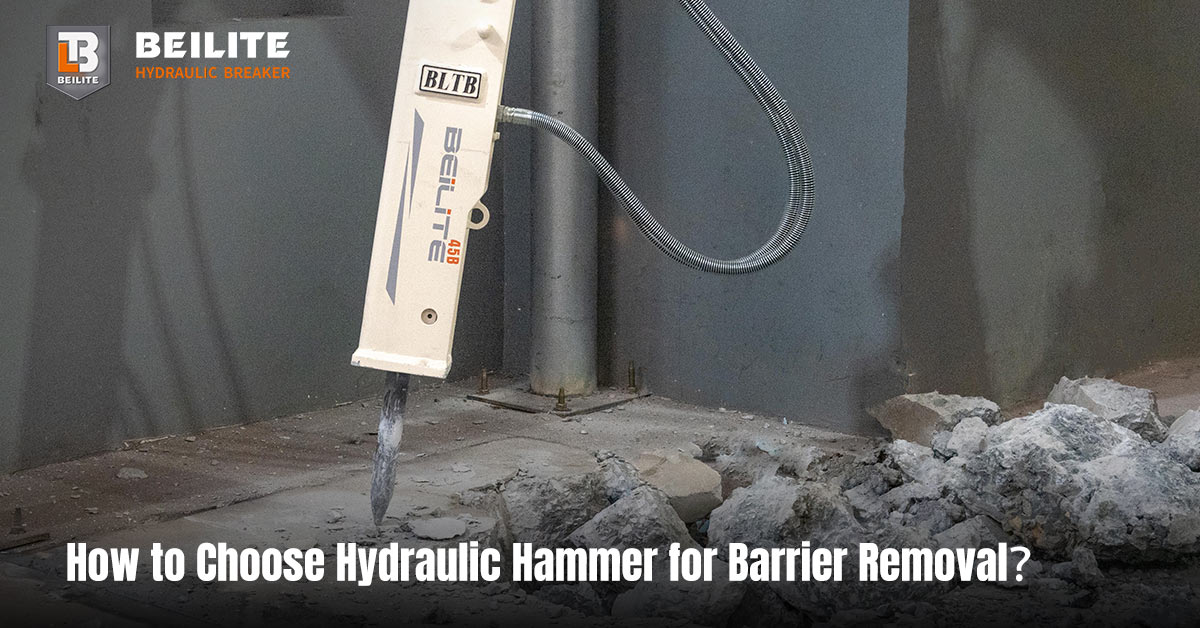
Barrier removal refers to the controlled demolition and clearing of reinforced concrete structures used for traffic control and safety. These structures are typically found in transportation and industrial environments and must be removed efficiently without disrupting surrounding operations.
Common barrier types include:
These structures often contain steel reinforcement and high-density concrete, making mechanical breaking equipment essential for efficient removal.
Challenges:
Challenges:
Challenges:
Challenges:
Recommended Reading: 14 Common Uses of Hydraulic Breakers
Hydraulic breakers are widely used in barrier demolition because they combine impact force with operational flexibility.
Hydraulic breakers use high-pressure hydraulic power to drive a piston that repeatedly strikes a tool bit. This impact energy fractures concrete and separates reinforcement, making it ideal for dense barrier structures.
Compared to jackhammers or hand tools, hydraulic breakers significantly reduce demolition time and labor requirements. On large highway projects, this can translate into days or even weeks of saved work.
Although initial attachment investment may be higher, hydraulic breakers reduce overall project costs by improving cycle speed and minimizing labor dependency.
Most breakers can be mounted on standard excavators, allowing contractors to use existing fleets without major modifications.
Mechanical breaking reduces worker exposure to falling debris, vibration injury, and traffic hazards.
Recommended Reading: How to Choose the Right Hydraulic Breaker for Stone Crushing?
Correct sizing is essential for efficiency and equipment longevity. A breaker that is too large can overload the excavator boom, while one that is too small will reduce productivity.
Key principle:
Barrier material type directly affects breaker selection:
Hydraulic compatibility is one of the most critical selection factors.
Incorrect matching may result in overheating, poor performance, or equipment failure.
Different tool heads are used depending on demolition stage:
Selecting the right pairing improves productivity and reduces wear. Typical combinations include:
Proper matching ensures stable performance and longer service life of both the hydraulic breaker and the carrier machine.
| BEILITE Model | Chisel Dia. (mm) | Operating Weight (kg) | Compatible Excavators (tons) | Ideal Applications |
| BLTB-53 / 60 | 53 / 60 | 180 / 263 | 1.5–3.5 / 3–6.5 | Urban renewal, narrow spaces, and mini-excavator jobs. |
| BLTB-70 / 75 | 70 / 75 | 382 / 466 | 4.5–9 / 6–11 | Municipal roads, pavement repairs, and utility trenching. |
| BLTB-100 | 100 | 986 | 9–14 | Bridge demolition, thick concrete slab cracking. |
| BLTB-135 / 140 | 135 / 140 | 1756 / 1910 | 16–22 / 18–26 | Heavy infrastructure dismantling, bulk excavation, quarrying. |
Conclusion: For most concrete barrier removal projects, hydraulic breakers provide the best balance between productivity, cost, and versatility.
This workflow is widely used on highway and infrastructure demolition projects.
Related Passage:Excavator Hammer Supplier for Construction Industry: How to Evaluate
Barrier removal costs depend on multiple variables:
Actual costs vary widely depending on region and project complexity. Efficient breaker selection can significantly reduce total project expenditure.
What size hydraulic breaker is best for Jersey barrier removal? It depends on excavator size, but medium-duty breakers are typically preferred.
Can a mini excavator remove concrete barriers? Yes, but only smaller or lightly reinforced sections.
How much hydraulic flow does a breaker require? It varies by model, but must match excavator specifications.
Is a breaker better than a pulverizer? Yes for initial demolition; pulverizers are better for secondary processing.
How long does barrier removal take? It depends on barrier length, reinforcement, and equipment size.
Can concrete barriers be recycled? Yes, crushed concrete is often reused as aggregate.
What is the best breaker tool for reinforced concrete? Moil points and heavy-duty chisels are commonly used.
How often should breaker tools be replaced? Replacement depends on usage intensity and material hardness.
Selecting the right hydraulic breaker is essential for maximizing productivity and minimizing operating costs during barrier removal projects.
By matching breaker size to carrier weight, understanding hydraulic requirements, and following proper operating procedures, contractors can achieve faster demolition and longer equipment life.
If you’re looking for a hydraulic breaker for highway barriers, Jersey barriers, bridge demolition, or industrial concrete removal, consulting an experienced attachment supplier is the best way to ensure optimal equipment selection for your specific application.





 Phone/ Whatsapp:
  Email: