Hydraulic Breaker for Backhoe Loaders: The Complete Buyer’s Guide
2026-09-16

Operating heavy equipment in extreme heat—common in quarrying, iron ore, and mineral processing sites—presents severe challenges. Standard hydraulic attachments often struggle with thermal management, leading to pressure loss, premature component wear, and unplanned downtime. At BEILITE, our mission is to ensure your production schedule stays on track, even when ambient temperatures exceed normal operating limits.
We design our high-temperature hydraulic breakers to not only survive but thrive in environments where heat pushes equipment to its limits. By focusing on aggressive thermal control and superior material science, we ensure maximum impact force remains consistent throughout long shifts, even under the harshest conditions. Our approach is not simply reactive—it’s engineered to prevent thermal issues before they arise, helping mining operators reduce downtime and maintenance costs.
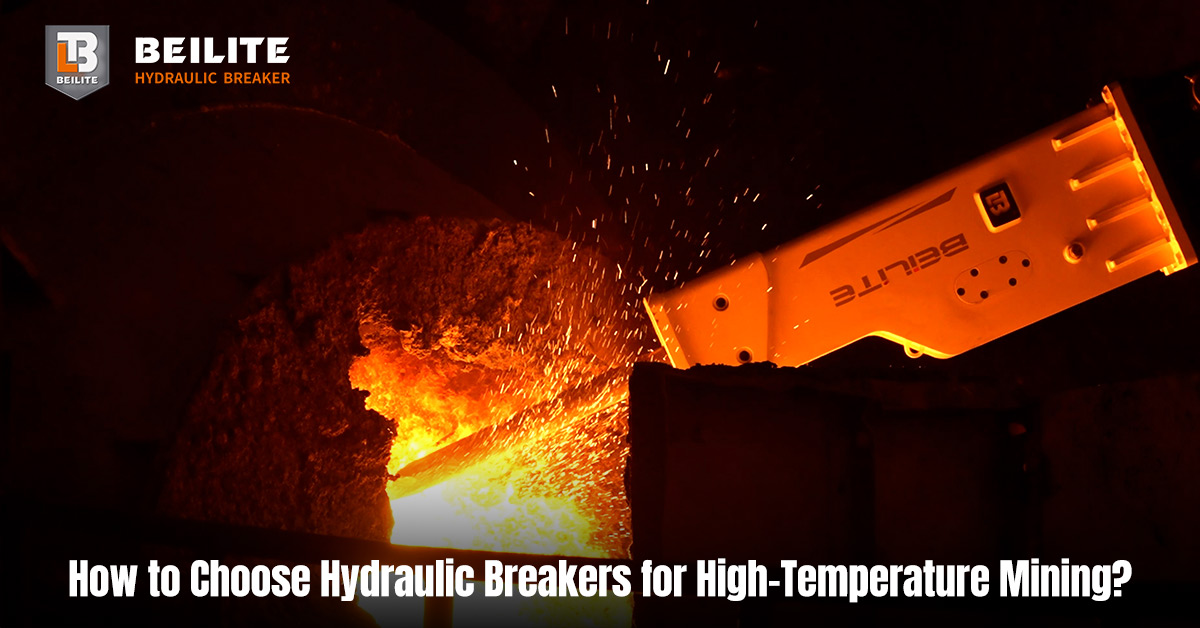
High ambient temperatures, combined with the friction and energy conversion inside a hydraulic breaker, lead to excessive oil temperatures. Overheating is arguably the single greatest threat to productivity and the longevity of internal components. The primary effects include:
Recommend Reading: How to Choose the Right Hydraulic Breaker for Your Medium or Large Excavator
These issues are compounded in mining environments, where continuous operation and heavy workloads amplify heat generation. For operators, this can translate to frequent unscheduled maintenance, reduced operational efficiency, and higher total cost of ownership.
In a hot quarry or mine, the root cause of hydraulic breaker failure rarely lies in a single component—it usually involves the catastrophic failure of the entire sealing and lubrication system:
Recommend Reading: Why Your Hydraulic Breaker is Leaking Oil & How to Fix It
Operators often overlook the cumulative impact of these factors, focusing on individual parts instead of the holistic thermal resilience of the breaker system.
True resilience in high-temperature operation comes from engineering a system that proactively controls heat rather than merely reacting to it. BEILITE high-temperature hydraulic breakers incorporate multiple strategies to manage thermal stress:
Recommend Reading: Hydraulic Breaker Wear and Tear: The Cost of Improper Tool Handling
Field Insight: In a central Australian iron ore mine, repeated rear seal failures were traced to an undersized carrier oil cooler. By adding an external, high-capacity oil cooler, hydraulic oil temperature dropped by 15 °C, and seal life quadrupled. This example demonstrates that temperature problems cannot be solved by replacing seals alone.
Our high-temperature hydraulic breakers also focus on high operating pressure and robust structural materials:
Recommend Reading: How to Choose the Right Hydraulic Breaker for Your Project
14 Common Uses of Hydraulic Breakers
This combination ensures that BEILITE breakers deliver reliable performance in high-demand applications, including quarrying, iron ore extraction, and mineral processing, where traditional breakers often fail under sustained heat.
Purchasing a breaker for high-temperature mining requires attention to technical specifications rather than marketing claims. Operators should consider:
Operating Pressure Range: Ensure the breaker’s maximum pressure exceeds the carrier’s requirements. High-pressure capacity acts as a buffer against performance loss due to thermal fluctuations.
Working Oil Flow Match: The breaker’s required working oil flow must align with the carrier’s auxiliary circuit. Incorrect flow can lead to overheating and premature failure.
Sealing System Specification: Confirm that the seal kit uses high-temperature-rated materials. Standard seals are a risk in hot mining conditions, potentially shortening breaker lifespan.
Recommend Reading: How to choose a high-quality hydraulic breaker from among numerous manufacturers: Buyer’s guide
Lower-cost breakers may seem attractive initially but often result in higher total cost of ownership (TCO) due to downtime, repairs, and reduced productivity. Extending hydraulic breaker lifespan in hot weather begins with proper specification and careful matching to the carrier and operating environment.
Routine maintenance becomes critical for safeguarding breaker performance under heat stress:
Recommend Reading: How Often Should a Hydraulic Breaker Be Greased?
The next generation of high-temperature hydraulic breakers will integrate active thermal management systems, including localized heat exchangers and advanced fluid channel designs that dissipate heat at the source.
This approach allows operators to monitor internal temperatures in real time and reduce load proactively before component failure occurs. Models like the BLT-155 already push the limits with 200–220 bar operating pressure, but future designs will further enhance thermal intelligence, ensuring consistent performance and minimal downtime.
Recommend Reading: Hydraulic Breaker Lifespan: Extend Your Hydraulic Hammer’s Life
At BEILITE, our commitment is to help operators maximize production efficiency while extending hydraulic breaker lifespan in hot weather, reducing maintenance costs, and ensuring reliable operation in the world’s hottest and most demanding mining environments.
Q: Does high oil temperature affect the accumulator’s function? A: Yes. Increased oil temperature heats the nitrogen gas, altering pressure and reducing piston stroke efficiency. Regular checks of accumulator gas pressure are essential in hot conditions.
Q: How can I tell if hydraulic oil is too hot without a gauge? A: Touch the return hose near the breaker. If it is uncomfortable to hold for 5 seconds, oil temperature likely exceeds 70 °C. Frequent seal leaks, sticky piston movement, or sudden drops in impact power are additional indicators.
Q: Should I use different Chisel Paste or grease in summer? A: Yes. Use copper- or graphite-based paste formulated for high-temperature and high-pressure resistance.
Q: What is the benefit of a higher operating pressure like 220 bar? A: Higher operating pressure ensures consistent impact energy even when oil thins due to heat. The breaker remains effective in high-temperature mining environments.
Keywords naturally integrated:






 Phone/ Whatsapp:
  Email: