Hydraulic Breaker for Backhoe Loaders: The Complete Buyer’s Guide
2026-09-16

Hydraulic breakers, also called hydraulic hammers or rock breakers, rely on a combination of high-pressure oil and precision engineering to deliver powerful impact energy for breaking rock, concrete, and asphalt. Among the many critical components inside a breaker, the accumulator plays a vital role in ensuring consistent performance, reducing stress on the hydraulic system, and extending the breaker’s working life.
We will explore what the accumulator does, how it functions, the benefits it provides, and what you need to know for proper maintenance.
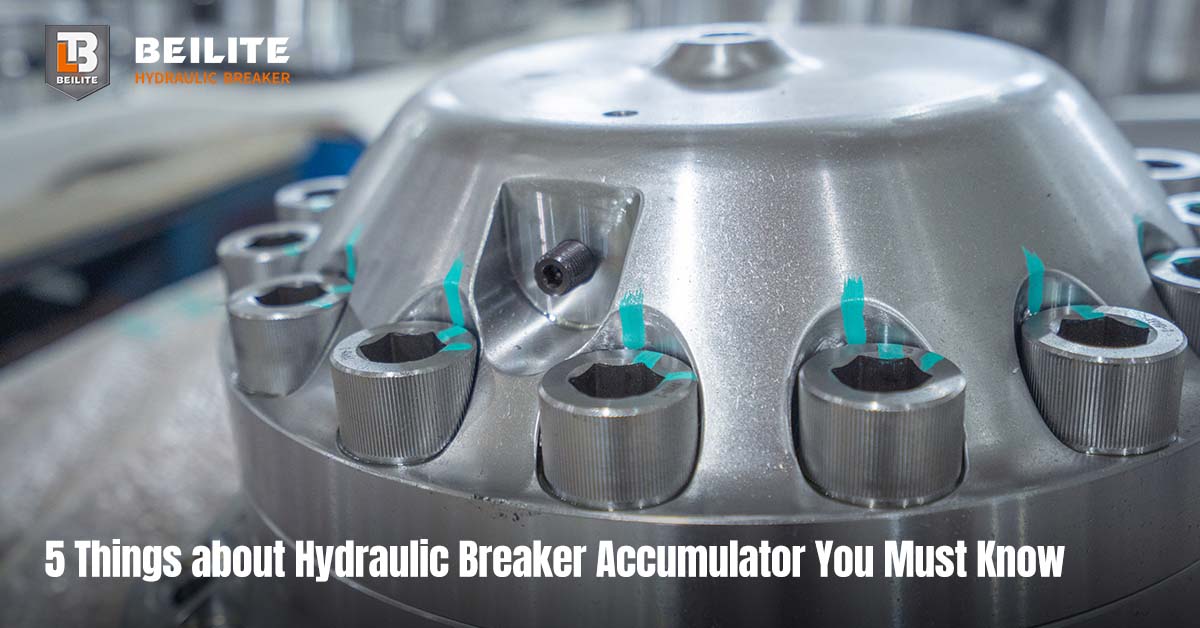
The accumulator is a high-pressure container inside the hydraulic breaker filled with both hydraulic oil and nitrogen gas. It is designed to store and release energy, acting like a cushion that absorbs pressure fluctuations and provides extra power when needed.
Think of it as the “shock absorber” and “energy booster” of your hydraulic hammer—it smooths out pressure spikes while also helping the breaker deliver strong, consistent blows.
Reading More: Working Principle of Hydraulic System in Hydraulic Breaker Hammer
The accumulator stores hydraulic energy during low-demand phases and releases it instantly during impact. This helps the breaker deliver stronger and more efficient blows, especially when working on hard rock or reinforced concrete.
Hydraulic systems naturally experience pressure fluctuations. The accumulator reduces these variations, protecting seals, pistons, and other internal components from excessive stress.
By acting as a buffer, the accumulator absorbs recoil shock generated during impact. This reduces vibration transmitted to the excavator boom, improving operator comfort and minimizing machine wear.
Without an accumulator, pressure spikes can travel back into the excavator’s hydraulic circuit, potentially causing damage. The accumulator ensures smooth oil flow and protects the carrier machine.
A well-functioning accumulator not only improves performance but also reduces wear on the breaker housing, piston, and valves, resulting in longer service life and lower maintenance costs.
Reading More:Hydraulic Breaker Lifespan: Extend Your Hydraulic Hammer’s Life
If the accumulator in a hydraulic breaker malfunctions, operators may notice:
When these symptoms appear, the nitrogen pressure inside the accumulator may be too low or the diaphragm/bladder could be damaged.
For broader maintenance practices, see:
Internal Link: Extend Life, Boost Efficiency: Daily Maintenance and Operation Guide for Hydraulic Breakers
In general, a hydraulic breaker accumulator should be checked for nitrogen pressure every 3 to 6 months, depending on operating conditions and breaker usage intensity.
If the breaker feels underpowered, produces weaker blows, or generates more vibration than usual, it’s often a sign that the nitrogen pressure is too low and needs recharging.
Always use the manufacturer-recommended nitrogen charging kit and avoid overcharging, as excessive pressure can damage the diaphragm or bladder inside the accumulator.
The hydraulic breaker accumulator function is central to reliable and efficient breaker performance. By storing and releasing hydraulic energy, stabilizing pressure, and protecting both the breaker and carrier machine, the accumulator helps maximize productivity while reducing downtime.
Whether you’re using a mini excavator breaker for urban demolition or a heavy-duty hydraulic hammer for quarry work, understanding and maintaining the accumulator is key to getting the most out of your investment.
At Beilite, we design hydraulic breakers with advanced accumulator technology, ensuring durability, safety, and consistent performance in the toughest environments.
A hydraulic breaker is an essential attachment for excavators and other construction machinery, designed to demolish concrete, rock, and other tough materials efficiently. Among its many components, the accumulator plays a critical role in ensuring smooth operation and longevity of the equipment.

hydraulic breaker accumulator function, hydraulic breaker accumulator, hydraulic hammer accumulator, rock breaker accumulator, accumulator maintenance, hydraulic breaker performance, hydraulic hammer for excavator







 Phone/ Whatsapp:
  Email: